Digital Editions
Are you looking for a technical platform for your digital edition? scroll to top
arthistoricum.net supports art scholars worldwide in providing text and image corpora within the framework of digital editions. Heidelberg University Library has set itself the goal of uniting a heterogeneous and broad spectrum of written artefacts and edited texts under a common roof and enabling editions with different levels of indexing. Among other things, correspondence, illuminated manuscripts, source texts within the framework of catalogues raisonnés, handwritten notebooks or diaries written by artists, but also art journals will be processed.
Goals include the use of current standards in text and image mark-up (XML/TEI) as well as the possibility of personalised annotation and commenting. All content is made available in open access and in accordance with FAIR principles.
The TEI schema and rule set of heiEDITONS used for data modelling is a TEI-compliant adaptation of the general XML-based rule set of the Text Encoding Initiative (TEI). The Heidelberg digitisation system DWork and the open source XML database eXist-db are used for the technical realisation of the digital editions.
The starting point is the formal indexing, which structures the text into semantic and content-related units and takes into account layout specifics of the source. The editorial work is done by further indexing, which includes editorial interventions (e.g. normalisations) and editorial comments. This is supplemented by the dynamic integration and display of register entries, which can also be enriched with information from the GND. In addition to the transcription in source view, a reading view of the texts will also be visualised in the future.
In addition to optimising the visualisation of the edition results - in coordination with various cooperation partners - the possibilities for supporting the specialist community in the concrete creation of digital editions are currently being further developed.
Current Edition Projects scroll to top

Camera Work
The research project "Camera Work - Inside / Out: History, Present and Future of an International Medium of Art and Photography History" is currently in a pilot phase at the Chair of History of Fine Art at the Art History Institute of the University of Zurich. The aim of the project is the development and use of technical and structurally advanced working and publication tools of digital humanities to allow access to the extensive and media-heterogeneous research material.
Further information on Camera Work
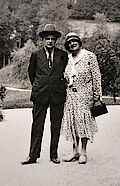
Family Correspondence Klee online
The aim of the project, which is currently being set up in cooperation with the Art History Institute of the University of Zurich, is to use the technically and structurally advanced working and publication instruments of Digital Humanities to produce a text-critical and art-historically annotated edition of the extensive correspondence between Lily Klee and her son Felix Klee.
Further information on „Familienkorrespondenz Klee online“

The «Maltechnik-Notizbuch» by Hans Emmenegger
The subject of the project is the online edition of a notebook that the Central Swiss painter Hans Emmenegger (1866-1940) systematically filled with painterly information in the first quarter of the 20th century; today it is in the artist's estate in the Central and University Library of Lucerne.
Further information on Das «Maltechnik-Notizbuch» von Hans Emmenegger
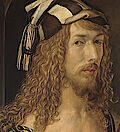
duerer.online
Seit Juni 2020 entwickelt die UB Heidelberg gemeinsam mit den Museen der Stadt Nürnberg und der Albrecht-Dürer-Haus-Stiftung e.V. ein virtuelles Forschungsnetzwerk zu Albrecht Dürer (1471–1528). Grundidee des von der DFG geförderten Projekts ist es, zunächst die Werke zu erschließen, die im umfangreich erhaltenen schriftlichen Nachlass des Künstlers genannt sind. Ausgewählte Quellen, die als Datengrundlage dienen, werden – in Teilen synoptisch – ediert.
Welscher Gast digital
A first example is the TEI-based digital text-image-edition of the „Welschen Gastes“ by Thomasin von Zerklaere, a collaboration project by UB Heidelberg and the Collaborate Research Centre „Materiale Textkulturen“ (SFB 933) of Heidelberg University.
Wir beraten Sie gerne bei Ihren digitalen Editionsvorhaben.
Contact
Dr. Maria Effinger
Universitätsbibliothek Heidelberg
Plöck 107-109
69117 Heidelberg
Tel.: +49 62 21 54 35 61
E-Mail: effinger@ub.uni-heidelberg.de
Nicole Sobriel, M.A.
Universitätsbibliothek Heidelberg
Plöck 107-109
69117 Heidelberg
Tel.: +49 62 21 54 23 64
E-Mail: Sobriel@ub.uni-heidelberg.de